Concrete retaining walls in Shafter CA - a wall that drains and stays put
A slope creeping into your yard or a wall starting to lean? We build concrete walls designed and drained to hold the ground back.
- Licensed and insured.
- Free quotes on site.
- Replies within 1 business day.
How do you build a retaining wall that won't lean?
A concrete retaining wall holds back the sideways push of the soil behind it. In Shafter we build each one to its design, on a footing that keeps the wall from tipping or sliding, with drainage behind it so water can't build up. We're based in Shafter and work across Shafter, Bakersfield and the cities around them.
Most people call when a bank is sliding into the yard, an old wall has started to tip, or they want to cut a flat spot into a slope for a patio or a pool. The price mostly moves with how tall and how long the wall is, how much digging the footing takes, how much steel and drainage the design calls for, and how easy it is to get a truck and a crew to the spot. The schedule depends on settling the design and any permit before we dig, then giving the new wall time to gain strength before soil goes back behind it. I'll look at the site and give you a written estimate that says what's included, so you aren't left guessing.
How do you know your slope or wall needs attention?
Wall leaning at the top
If the top of the wall has tipped out past the bottom, the ground behind it is winning, and that usually means the drainage back there isn't doing its job. A leaning wall doesn't straighten itself, and the longer it goes, the more of your yard moves with it.
Damp streaks on the face
Dark, wet patches or a white crust on the face after rain or watering usually mean water is sitting behind the wall and working its way through. That's a drainage problem first, and it's cheaper to deal with before the wall starts to move.
Slope sliding into the yard
Dirt washing onto the patio, a fence starting to tip or a bank that gets a little shorter every winter means the slope needs something to hold it. Waiting usually means more cleanup each year and a bigger cut to deal with when you finally build.
How we build concrete retaining walls
I build a wall to its design, not to a guess based on how tall it is, because the footing size, the steel, how deep the wall sits and the drainage all come out of that design or the code. Once that's settled, our crew digs out for the footing, sets the steel, pours the footing and builds the wall on it, either formed and poured or laid in block. Then the drainage goes in behind it, with drain rock, filter fabric to keep dirt out of the rock, a pipe to an outlet and weep holes, which are small openings near the bottom that let water out. Dirt never gets tired of pushing, so I give that drainage as much care as the face, because trapped water is what leans a wall. Last, we backfill and grade the top so rain runs away from the wall instead of soaking in behind it.
A retaining wall is often the first step of a bigger job. Cutting into a slope can open up room for a shop or a back room, and that flat ground will want a new concrete floor on a base packed as carefully as the wall's. When the wall holds a bank above a pool, we plan it together with the concrete pool deck so water off the slope runs past the deck and not under it.
Poured concrete wall
Formed and poured in place with steel inside, it gives you one solid piece with a plain, smooth face. It suits owners who want a clean concrete look, and the forms can follow a curve or step down with the slope.
Reinforced block wall
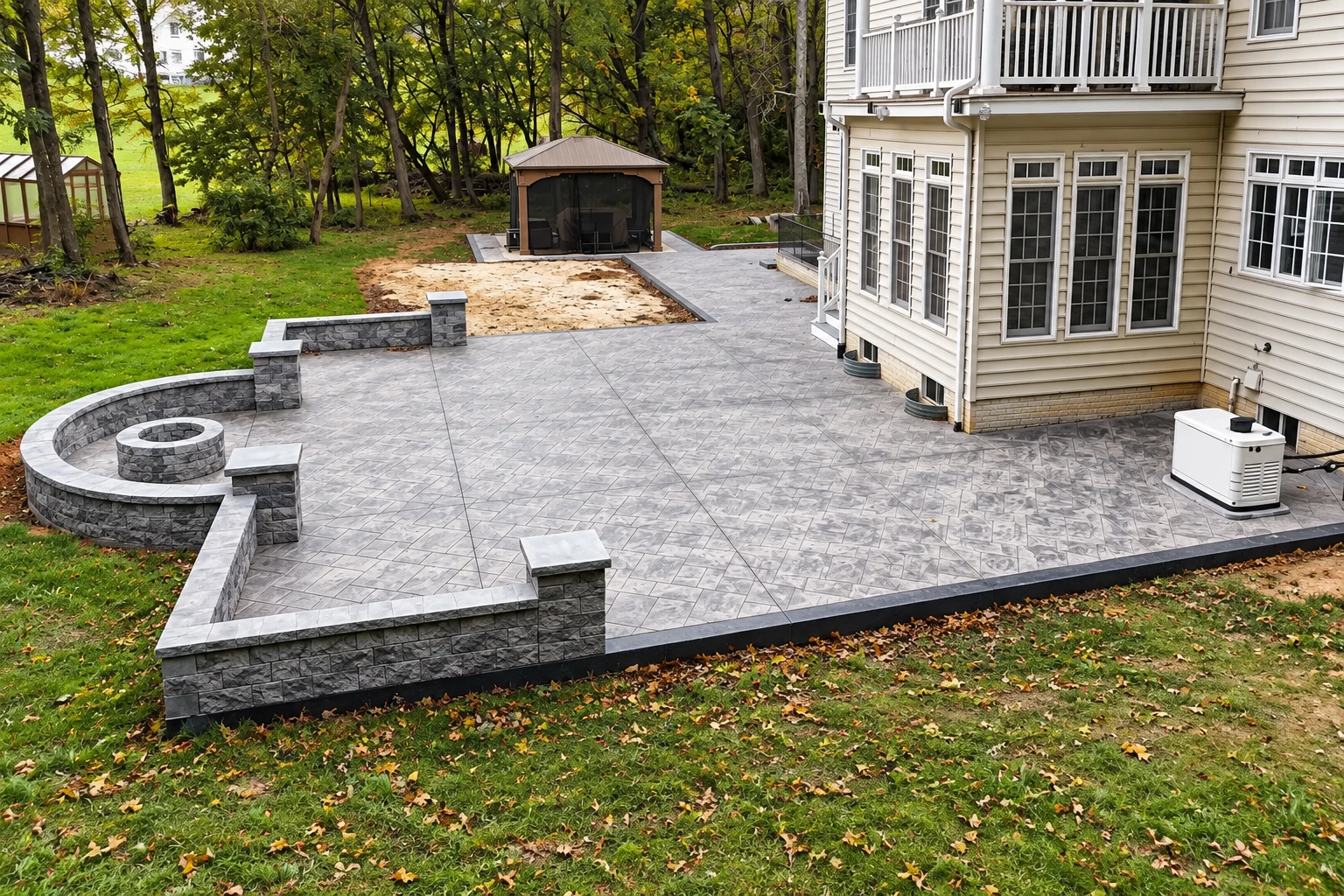
Concrete block laid on a poured footing, with steel and grout run down through the hollow cells. The steel is what gives a block wall its strength, and it suits owners who like the look of a masonry face.
Get a written estimate for your retaining wall
We reply within one business day to set a time, and I come out to look at the slope and measure. The estimate is free, done on site and comes with no obligation.
Call (661) 776-8737- Based in
- Shafter, CA 93263
- Hours
- Mon–Fri: 6 AM–11 PM, Sat–Sun: 8 AM–9 PM
What happens after you call about a retaining wall?
From your first call to the final walk-through, here's who does what and what you have in hand at each step.
Call and book a visit
You call or send the form, and I come out to look at the slope, measure and ask how you'll use the ground above and below the wall. A fence, a driveway or a pool near the top changes what the wall has to hold.
Read your written estimate
You get a written estimate that says what's included, so you can see what's going into the footing, the steel and the drainage before you decide. If the wall needs a permit, we sort that out before anybody digs.
Our crew builds with me
Our own crew digs, pours and builds the wall, and I'm on the job with them. If what we find in the ground doesn't match what we planned for, I'll tell you before we keep going.
Walk the finished wall
When we're done, I walk the wall with you and show you where the water is supposed to come out. That's the spot you'll want to check after a good rain.
Why Shafter homeowners call us for retaining walls
I look at every job
I come out to look at every job and write the estimate myself, and I'm on site with our own crew while they build it. The person who measured your slope is the one watching the drain rock go in.
In business since 2013
I started as a helper mixing and hauling for a small crew, then opened this business in Shafter in 2013. Most bad concrete I've seen went wrong below the surface, so that's where I'd rather spend the extra time.
Licensed and insured, ask anyone
We're licensed and insured, and that's the first thing worth asking any crew you're thinking of hiring. In California, the license class for concrete contractors covers forming, pouring, placing and finishing concrete, which is the work a retaining wall takes.
On a retaining wall, the part doing the work ends up buried, so ask about the footing and the drainage before you ask about the face. Send us the details or call (661) 776-8737, and I'll come out and take a look.
Building retaining walls and the slabs around them in Shafter
The Shafter Building Department issues building permits, and the city lists retaining walls among the projects that need one, so plan on a permit for yours. If your wall needs a permit, we handle the application and line up the inspections, and if you're not sure, we check with the building office for your address before we start. Questions about your wall's height or design can go straight to the city's Building Official at 661-746-5002, Monday to Friday, 8 a.m. to 5 p.m.
Around Shafter, a lot of the walls people ask us about are short ones, where a yard steps down, along a driveway cut into a grade or behind a pool. Short doesn't mean simple, so they get a real design and real drainage like any other wall. In the summer heat we pour early in the day, because concrete that dries out too fast ends up weaker. We build the same way on jobs in Bakersfield and Wasco.
Questions about retaining walls in Shafter
Call (661) 776-8737How much does a concrete retaining wall cost in Shafter?
Poured concrete retaining walls in the Bakersfield area usually cost about $35 to $50 per square foot of wall face, the part you see from the front. That's the going rate around here, not our price. Your own number comes from the written estimate after I've seen the site.
What causes a concrete retaining wall to lean?
Water trapped behind the wall is the usual cause, because water pressure can greatly increase the load the wall is holding back. It also pushes through the wall as leaks, which is why drainage has to be part of the wall's design from the start, not something added later.
How do I take care of a retaining wall after it's built?
Check the drainage twice a year, and walk the wall after a heavy rain to make sure water is actually coming out of the weep holes and the pipe outlet. A drainage system works for years with little attention, so if those openings stay dry after a soaking, that's the time to call.
How long does a new retaining wall need before you backfill it?
It needs to wait until the wall has gained enough strength and has the bracing to take the load, so there's no point rushing it. When the soil does go back, it gets packed down in controlled layers, because heavy packing equipment right behind a young wall can overload it. It's fair to ask any crew how they'll pack the backfill, and I'll go over ours at the estimate.
Can I draw my own plans for a retaining wall in Shafter?
Yes. Shafter lets homeowners get a permit for improvements on their own home and prepare their own plans, as long as the plans meet all codes, structural codes included, and you're then the one responsible for meeting them. The city's Building Department recommends a qualified professional in most cases and says one may be required when the plans don't meet minimum code requirements.
What should I do before digging for a retaining wall in Shafter?
Call 811 before anyone digs, which the city's permit page tells residents to do, so buried lines get marked first. The city also suggests calling your insurance agent and reviewing your coverage before you take on a project.
Related concrete work for a sloped lot
Concrete floor installation
A wall that levels a sloped lot often leaves room for a shop or addition, and that new space needs a flat floor on a well-packed base.
Concrete pool decks
When the pool sits below a slope, the deck around it depends on the wall above staying put, and we plan the drainage for both together.
Service areas for retaining walls near Shafter
Shafter Concrete is based in Shafter, CA, and we build retaining walls in the 12 cities listed below, including Bakersfield and Delano. They aren't the only places we work, so if yours isn't listed, give us a call.
Shafter, CA
Get your retaining wall planned right
Send the wall's location, rough length and height and a few photos of the slope, and I'll show up already knowing what to look at.